
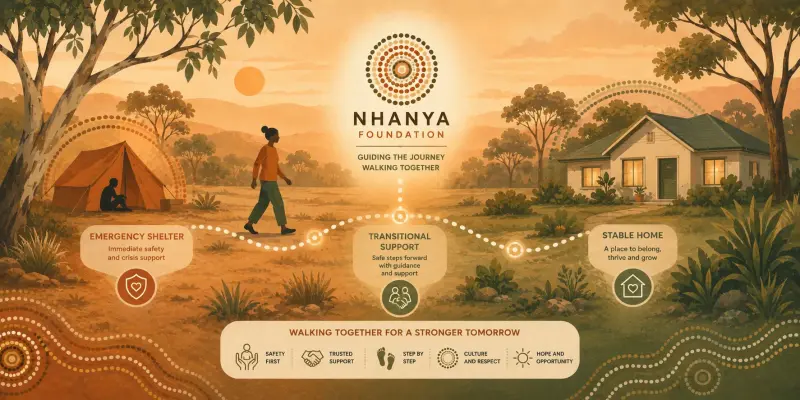
The 2024-25 AIHW Specialist Homelessness Services report counted almost 289,000 Australians accessing specialist homelessness support in a single year. That number has been climbing steadily. Behind it are parents leaving domestic violence situations, young people exiting foster care, older renters priced out of the private market, and people with disability who lack appropriate accommodation pathways.
If you are looking for emergency housing in Australia, whether for yourself, someone you care about, or a client you support, this guide covers what is available, how to access it in each state, and what to realistically expect from each type of service.
What Is Emergency Housing in Australia?
Emergency housing is short-term accommodation provided to people experiencing a housing crisis. It sits within a broader system called Specialist Homelessness Services (SHS), which are government-funded programs delivered by community organisations across the country under the National Housing and Homelessness Agreement.
The term covers several types of accommodation: crisis shelters, refuges for people escaping domestic violence, emergency motel placements funded through state housing agencies, and supported transitional housing. Each has different eligibility criteria, support levels, and expected durations. A specialist homelessness worker will assess which option fits your circumstances.
What Counts as Homelessness in Australia?
Most people associate homelessness with sleeping rough on the street, but that picture is only a fraction of the reality. Australia’s Bureau of Statistics defines it far more broadly, and understanding that definition matters when you are looking for services.
Six operational categories are used to measure homelessness nationally: sleeping rough in improvised dwellings or tents, staying in supported accommodation, living temporarily with other households (couch surfing), staying in boarding houses, living in temporary lodgings such as motels, and living in severely overcrowded dwellings. People staying temporarily with other households make up the single largest group in the 2021 Census count, followed by those in supported accommodation and boarding houses.
People living in severely overcrowded or unsafe housing frequently do not identify as homeless, which means they often delay seeking support. If your housing is insecure, unsafe, or genuinely unsustainable and you have no stable alternative, a specialist homelessness service can assess whether you are eligible for support, even if you currently have a roof over your head.
How Many People Experience Homelessness in Australia?
On Census night in August 2021, the ABS estimated 122,494 people were experiencing homelessness across Australia. That is a single-night snapshot, not a continuous count, and the actual number of people who experience homelessness over the course of a year is considerably higher. The AIHW’s 2024-25 annual report counted close to 289,000 people accessing specialist homelessness services over the full year, with family and domestic violence clients making up over 40% of all SHS clients.
The 2021 Census data showed that women made up 44% of people experiencing homelessness, a proportion that had grown notably since the previous Census. Young people aged 12 to 24 accounted for 23% of the homeless count. Aboriginal and Torres Strait Islander people were significantly over-represented, at roughly 20% of those experiencing homelessness compared to around 3.8% of the general population.
What Are Specialist Homelessness Services?
Specialist Homelessness Services (SHS) are the primary entry point for emergency and crisis housing support in Australia. They are funded by state and federal governments and delivered by community sector organisations, and they operate across every state and territory.
Contact an SHS and a worker will typically take these steps:
- Assess your immediate safety and housing situation
- Identify your needs including any vulnerabilities such as disability, mental health conditions, family violence, or having children
- Refer you to available emergency or crisis accommodation in your area
- Help you apply for social housing, rental assistance, or other financial support
- Connect you with case management and other services during your housing crisis
SHS services can provide support both for people who are already homeless and for those at imminent risk of losing their housing. Eligibility is needs-based, not entitlement-based, meaning availability depends on your circumstances and local service capacity. At Nhanya Foundation, our Accommodation Support service provides practical help navigating this process, from exploring housing options and rental applications to disability-related accommodation pathways.
How to Get Emergency Housing Help in Australia, State by State
Australia’s homelessness service system is administered at the state and territory level. The number you call depends on where you are. These are the verified, current contact points as of 2026:
New South Wales: Link2Home
Call 1800 152 152, available 24 hours a day, 7 days a week. Link2Home is the NSW Government’s centralised homelessness information and referral service. Workers will assess your situation and connect you with services in your local area. Between 10pm and 9am, Link2Home provides information and assessment only and refers to emergency services rather than placing you directly into accommodation, so contacting them earlier in the evening gives you more options. For housing assistance outside Link2Home, you can also contact the Homes NSW Housing Contact Centre on 1800 422 322 during business hours.
Victoria
Call 1800 825 955, free call, available 24 hours a day. A housing and support worker will take your call and refer you to services in your local area. Outside of business hours, calls are directed to Salvation Army Crisis Services. If you are escaping family violence, call Safe Steps on 1800 015 188, which is also available 24 hours a day.
Queensland: Homeless Hotline
Call 1800 474 753, available 24 hours a day, 7 days a week. This is the Queensland Government’s centralised referral service for people experiencing or at risk of homelessness. Alternatively, the Department of Housing and Public Works can be contacted for housing assistance enquiries.
South Australia: Homeless Connect SA
Call 1800 003 308, available 24 hours a day, 7 days a week. Homeless Connect SA provides assessment and referral to emergency accommodation and homelessness support across the state. For eligible people assessed by homelessness services, the SA Housing Trust provides up to 7 initial nights of emergency accommodation. Clients experiencing domestic and family violence, when referred by a specialist DFV service, may receive up to 21 nights.
Western Australia
Contact Entrypoint Perth on 1800 124 684, which operates Monday to Friday from 9am to 7pm and Saturday from 9am to 5pm. Entrypoint Perth provides a free assessment and referral service for people who are homeless or at risk of homelessness across WA. For after-hours support or people in crisis outside those hours, Crisis Care operates 24 hours a day on 1800 199 008 and handles urgent accommodation concerns, domestic violence support, and child safety concerns.
All States and Territories: Ask Izzy
Wherever you are in Australia, Ask Izzy (askizzy.org.au) is a free, anonymous website searchable by postcode that lists local homelessness services, food assistance, financial help, family violence support, and counselling. It covers Tasmania, ACT, Northern Territory, and all regional and rural areas. It is one of the most practical tools for finding what is nearby when you do not know where to start.
Types of Emergency and Crisis Housing Available
When you contact a specialist homelessness service, the type of accommodation you are referred to depends on your circumstances, the services available in your area, and your specific support needs. The main types are:
Crisis Accommodation
Short-term placements in shelters, refuges, or hostels. Women’s refuges provide safe accommodation specifically for women and children escaping domestic violence. General crisis shelters serve adults and families experiencing homelessness for other reasons. Duration is typically measured in days to a few weeks while you work with a support worker on next steps. Access is usually through a homelessness hotline or direct referral from an SHS worker.
Emergency Temporary Accommodation (ETA)
State-funded short-term placements in low-cost motels, caravan parks, or hostels. In NSW, this is administered through Homes NSW and accessed via Link2Home or a housing office. Duration depends on individual circumstances and there is no fixed entitlement to a specific number of nights. Extensions require ongoing contact with your support provider and progress on a housing plan. People exiting temporary accommodation are expected to have been working toward a more stable option during their stay.
Transitional Housing
Medium-term accommodation, typically weeks to several months, that provides stability while you pursue longer-term housing. Transitional programs usually include wrap-around support such as case management, life skills support, connections to Centrelink, health services, and employment assistance. This type of housing is a bridge for people who have moved through a crisis but are not yet ready for independent tenancy. Access is typically through specialist homelessness services after a needs assessment.
Supported Housing
Long-term accommodation with integrated support services for people with complex needs, including those with disability, mental health conditions, or histories of chronic homelessness. Unlike general social housing, supported housing includes ongoing support as part of the model. Pathways into supported housing vary: some are through the NDIS, some through state mental health housing programs, and some through specialist community housing providers. Nhanya’s accommodation support pathway helps people understand and access supported housing options relevant to their disability or mental health situation.
Who Is Most Likely to Need Emergency Housing?
Homelessness does not have a single profile. The AIHW data points to several groups who are disproportionately represented in the SHS system, and understanding this helps people access the right pathway faster.
People with lived experience of family and domestic violence represent the largest single group accessing specialist homelessness services, over 40% in 2024-25. For them, safety is the first priority and the service pathway typically goes through a DFV hotline rather than a general homelessness line.
Young people leaving care, including foster care, residential care, or youth detention, are at significantly elevated risk of homelessness in the period immediately after exit. Dedicated youth homelessness services exist in most states and are usually best accessed through a youth worker, school counsellor, or by calling the state homelessness hotline and specifying that the client is a young person leaving care.
Other groups with particular vulnerability include people exiting prison without stable housing, people with disability who lack appropriate accommodation support, older women on low incomes who have experienced long-term financial disadvantage, migrants and refugees with limited access to mainstream supports, and people experiencing persistent mental health challenges. Many services have staff with specialist knowledge in these areas, so being specific about your situation when you first make contact helps get you to the right support faster.
Financial Assistance Available for Housing
Housing crises are rarely just about accommodation. Debt, lost income, or sudden costs often sit underneath a housing emergency, and there are targeted financial supports worth knowing about.
Commonwealth Rent Assistance
A supplementary payment available through Services Australia to people who pay rent and receive a qualifying Centrelink income support payment. It does not cover full rental costs but provides a regular supplement that can make private rental more sustainable for people on low incomes. Eligibility is assessed through Centrelink and does not require a separate application beyond your income support claim.
Bond Assistance
Many state housing programs offer rental bond assistance as a loan or grant to help cover the upfront bond required to enter private rental. Access is typically through your state’s housing authority or through a specialist homelessness service. Some SHS also have brokerage funds they can use to cover bond and initial rent for eligible clients transitioning out of crisis accommodation.
Emergency Relief
Community organisations including the Salvation Army’s Doorways centres, St Vincent de Paul, local welfare agencies, and Anglicare services provide emergency relief in the form of food vouchers, utility bill assistance, and small financial grants for urgent costs. These are not housing services per se, but stabilising finances quickly can stop a short-term crisis from escalating into a housing crisis. Ask Izzy lists local emergency relief providers by postcode.
No Interest Loans Scheme (NILS)
NILS provides small, interest-free loans for essential goods and services. If housing-related costs are the immediate problem, such as moving expenses, replacing household goods, or a gap in rent during a transition, NILS can help without adding to debt pressure. NILS loans are delivered through Good Shepherd and partner community organisations, accessed through their website or via referral from a social worker or SHS.
What If You Have a Disability?
If you are an NDIS participant and experiencing housing instability, your NDIS plan may fund accommodation-related supports that go beyond what general homelessness services can provide.
Supported Independent Living (SIL) covers the cost of support workers who provide daily assistance in your home so you can live as independently as possible. SIL is not rent or housing itself; it funds the support you receive inside the home. SDA (Specialist Disability Accommodation) is different: it funds the physical housing for participants with very high support needs who require a specially designed dwelling. Individualised Living Options (ILO) provides a more flexible, person-centred approach to home and living support that can be tailored to individual arrangements.
To access home and living supports through the NDIS, you generally need an existing NDIS plan and evidence that the support is reasonable and necessary for your goals. SIL in particular requires a functional assessment and a support need that the NDIA determines meets the threshold for funding. Not all NDIS participants qualify for SIL; eligibility is based on support need rather than diagnosis or housing preference alone.
To access the NDIS, you must apply before turning 65, be an Australian citizen or eligible resident, and have a permanent disability that significantly affects your daily functioning. If you are already a participant when you turn 65, you can continue in the scheme. SIL is primarily designed for adults. Under-18 participants are typically supported through family-based arrangements rather than SIL, though individual circumstances can vary.
Nhanya’s Support Coordination and Specialist Support Coordination services work directly with NDIS participants who are navigating accommodation options. If your plan includes Support Coordination funding, your coordinator can help you understand what home and living supports your plan may fund, assist with finding appropriate SIL or SDA providers, and manage the transition into more stable accommodation. Our disability support services team can also help you understand whether the NDIS pathway or a general homelessness pathway is the right starting point for your situation.
When Someone Is Not Ready to Engage with Services
A practical reality for case workers, family members, and outreach staff: not everyone in housing crisis is ready or willing to engage with formal services. People experiencing chronic homelessness, complex trauma, or mental health challenges may have had negative experiences with systems in the past and be reluctant to re-engage, even when their situation is urgent.
Assertive outreach is the model specifically designed for this. Rather than waiting for someone to call a hotline or walk through a service door, assertive outreach workers go out to where people are, build trust over time, and work on stabilisation before formal service engagement becomes realistic. Nhanya’s Assertive Outreach and Stabilisation Program operates on this basis, working with women, children, and young people who need relationship-based support before they can benefit from structured services. It is a deliberately slower approach because it tends to produce more durable outcomes for people with complex histories.
What Nhanya Foundation Can Help With
Nhanya Foundation is a Melbourne-based community organisation supporting women, children, and young people with services that build stability, wellbeing, and independence over time. Housing instability connects to almost every other challenge people face: mental health, disability, family safety, employment, and a person’s capacity to make decisions about their own life.
Our services that intersect with housing include:
- Accommodation Support: practical help with rental applications, exploring housing options, tenancy support, and disability accommodation pathways
- Advocacy and Service Navigation: case-by-case support to navigate housing systems, follow through on referrals, and uphold rights with dignity and informed consent
- Support Coordination: NDIS-funded support to understand and use your plan, including accessing home and living supports
- Specialist Support Coordination: for NDIS participants with complex situations requiring a higher level of coordination expertise
- Assertive Outreach and Stabilisation: intensive, relationship-based support for people who need engagement and stabilisation before formal services are accessible
- Skills for Life and Independence: building everyday skills and confidence for people working toward more independent living
If you or someone you know needs support with housing or you are not sure which service applies to your situation, contact Nhanya Foundation at nhanya.org.au/contact or call 03 8595 9012. You can also submit a referral at nhanya.org.au/referral.
Frequently Asked Questions About Emergency Housing in Australia
What number do I call for emergency housing in Australia?
The right number depends on your state. NSW residents should call Link2Home on 1800 152 152, which operates 24 hours a day, 7 days a week. Victoria’s number is 1800 825 955 (24/7). Queensland’s Homeless Hotline is 1800 474 753 (24/7). South Australia’s Homeless Connect SA line is 1800 003 308 (24/7). Western Australian callers can reach Entrypoint Perth on 1800 124 684 during business hours, or Crisis Care on 1800 199 008 for after-hours support. Nationally, Ask Izzy at askizzy.org.au helps you find services by postcode.
Can I access emergency accommodation if I am not sleeping rough?
Yes. The AIHW defines homelessness broadly to include people staying temporarily with others, in overcrowded or unsafe housing, in emergency motels, or in crisis shelters. If your housing is insecure or unsafe and you have no stable alternative, a specialist homelessness service can assess your situation. You do not need to be sleeping on the street to qualify for support.
How long can I stay in crisis accommodation?
There is no universal fixed period. Crisis accommodation is short-term while you and a support worker work on a plan for more stable housing. In NSW, temporary accommodation from Homes NSW typically begins for a few nights and is extended based on circumstances and progress. Transitional housing programs can provide stability for weeks or months. Your support worker will help you understand what is possible based on your situation and what services are available locally.
What housing support is available through the NDIS?
The NDIS funds accommodation-related supports for eligible participants including Supported Independent Living (SIL), Specialist Disability Accommodation (SDA), and Individualised Living Options (ILO). Each has different eligibility thresholds and covers different aspects of housing support. A Support Coordinator can help you understand what your NDIS plan may fund and how to apply for these supports. Nhanya’s support coordination team can assist with this process.
Does homelessness only affect people on very low incomes?
No. Housing stress and homelessness risk affect Australians across a wide range of income levels. Salvation Army research from 2025 found that nearly a third of Australians earning under $100,000 per year were concerned about becoming homeless in the next twelve months. Housing affordability stress was the primary reason for seeking SHS assistance for over 26,000 people in 2024-25, double the proportion from a decade earlier. Sudden life events such as relationship breakdown, job loss, or domestic violence can place anyone at risk, regardless of income.
How do I refer someone else for emergency housing support?
Most specialist homelessness services accept third-party referrals from family members, friends, professionals, or other workers. You can call the relevant state hotline on someone’s behalf. Getting consent is good practice where possible, but services will usually take an initial enquiry without it. You can also submit a referral through Nhanya Foundation at nhanya.org.au/referral if the person may benefit from our accommodation support, advocacy, or outreach services.
Need Accommodation Support or Housing Navigation in Melbourne?
Nhanya Foundation supports individuals and families with rental navigation, tenancy advocacy, assertive outreach, and NDIS home and living applications.
Explore Accommodation Support