
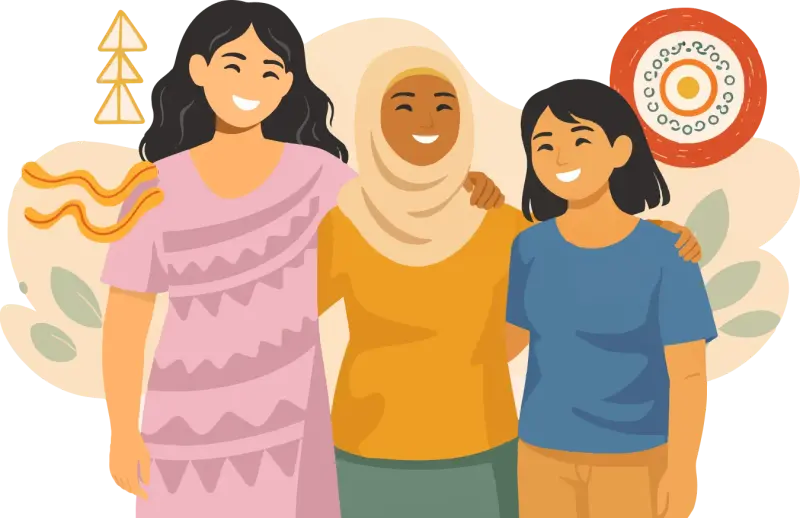
Navigating Australia's community and support services can be difficult for any family, and that difficulty is often greater for culturally and linguistically diverse (CALD) families, particularly where language, unfamiliar systems, or past experiences with services in another country add extra barriers.
Common barriers CALD families face
- Services and forms that assume a level of English proficiency or system familiarity that not every family has
- Uncertainty about whether a service is trustworthy, free, or connected to immigration status
- Cultural expectations around family, gender roles or community that are not always reflected in mainstream service design
- Not knowing which service is appropriate for a particular need, especially where systems differ significantly from a family's country of origin
What culturally responsive support looks like
Culturally responsive support starts with listening first. It means explaining options clearly, checking understanding rather than assuming it, and being upfront about what a service can and cannot do. It also means respecting that a family's priorities, and their comfort level with different types of support, may look different depending on their background and experience.
Practical steps for families
- Ask any service directly whether interpreter support is available before your appointment, rather than assuming it is not
- Bring a trusted support person if that helps you feel more comfortable, most services allow this
- Write down your main question or concern beforehand, in whichever language is easiest for you, so it is not lost in translation on the day
- It is okay to ask a service to slow down or explain something again
How Nhanya Foundation can help
Nhanya Foundation is committed to supporting culturally and linguistically diverse communities, and Aboriginal and Torres Strait Islander peoples, with an approach that is respectful, practical and culturally responsive. We listen first, explain options clearly, and work with the person and their support network to identify the safest and most suitable next step. If your family needs help understanding or accessing community services, contact us or submit a referral.
Culturally Responsive Community Support
Need help navigating health, disability, or welfare services in your language? Nhanya Foundation offers respectful, free guidance for CALD families across Melbourne.
Explore Navigation Services