
Emotional regulation is often talked about as if it is something a child either has or does not have. In reality, it is a skill that develops gradually, over years, and it develops at different rates for different children. Understanding this helps adults respond with patience rather than frustration when a child struggles to manage a big feeling.
What emotional regulation actually means
At its simplest, emotional regulation is the ability to notice a strong feeling, understand what is happening, and respond to it in a way that does not overwhelm the person or those around them. For adults, this often looks automatic. For children, especially younger children, it is a skill that is still being built, largely through repeated experience with a calm, responsive adult.
Why it develops slowly
The parts of the brain responsible for regulating emotion continue developing well into a person's twenties. This means it is entirely normal, not a failure of parenting, for a primary-school-aged child to still struggle to calm down after a big disappointment, or for a teenager to react more intensely than the situation seems to call for.
Everyday ways to support it
- Name the feeling out loud, calmly: "that really frustrated you." This helps a child build the language for what they are experiencing.
- Stay steady yourself. A child's nervous system takes cues from the adult nearby, so a calm adult presence is genuinely regulating.
- Wait until the big feeling has passed before problem-solving or discussing consequences. Most children cannot process a lesson while they are still overwhelmed.
- Build in predictable routines, since uncertainty is one of the biggest everyday triggers for dysregulation in children.
When to seek extra support
If big reactions are frequent, intense, or are affecting a child's relationships, schooling or safety, it is worth speaking with a GP or a qualified allied health professional. This is a normal, common step, not a sign that something has gone wrong at home.
Support for Emotional Regulation & Child Wellbeing
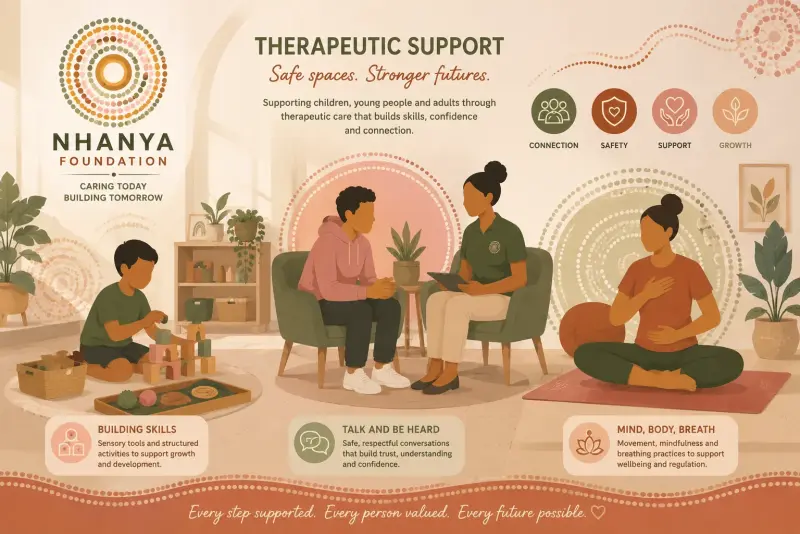
Nhanya Foundation connects families with multidisciplinary allied health (OT, Psychology, Speech) and support coordination across Melbourne.
Make an NDIS Referral Online