
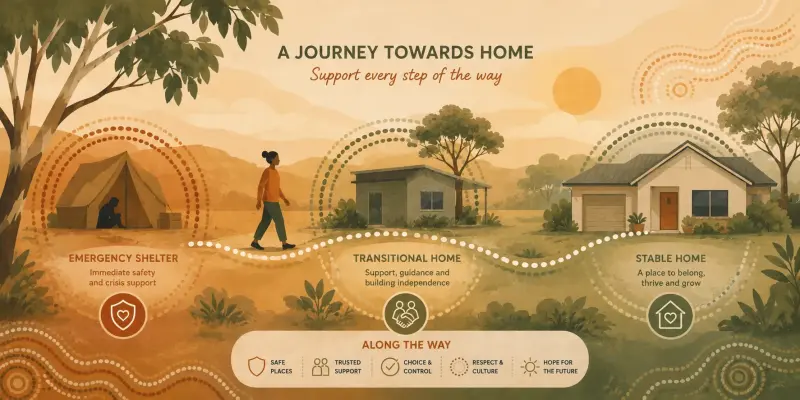
When people picture homelessness, they usually picture someone sleeping on the street. In reality, the large majority of people experiencing homelessness in Australia are never visible in that way. They are staying on a friend's couch, moving between overcrowded relatives' homes, living in a car, or stuck in unsafe housing because there is nowhere else to go. This is often called hidden homelessness, and it is easy to overlook precisely because it does not match the stereotype.
What hidden homelessness looks like
- Couch surfing between friends' or family members' homes with no stable address
- Severely overcrowded housing, where a household has far more people than the dwelling can reasonably support
- Staying in a car, garage or other space not intended for permanent living
- Remaining in an unsafe home, including situations involving family violence, because affordable alternatives are not available
Why it is missed so often
People experiencing hidden homelessness are frequently still going to work or school, which can make the situation invisible to people around them. Many also do not identify as "homeless" in their own minds, particularly if they are staying with family, which means they may not think to ask for housing help even when they urgently need it.
Why this matters for families and young people
Young people, women and children escaping family violence, and people with disability are all over-represented in hidden homelessness. Housing instability affects far more than shelter: it disrupts school attendance, employment, health, and a young person's sense of safety and routine, often quietly, over a long period of time.
Where to get support
If you or someone you know is in this situation, it is worth reaching out before things reach crisis point. Nhanya Foundation provides practical accommodation support, helping people explore housing options, prepare applications, and connect with the right services and providers. We do not operate crisis accommodation ourselves, but we can help make the pathway toward stable housing clearer and more manageable. Contact us to discuss your situation, or submit a referral on behalf of someone else.