
For many Australian families, school refusal has gone from an occasional bad morning to a recurring, exhausting pattern. It is important to say clearly: a child who refuses school is very rarely being lazy or defiant for its own sake. In almost every case, there is something underneath the behaviour that needs to be understood before it can be resolved.
What school refusal actually looks like
School refusal can show up as outright refusal to leave the house, physical symptoms like stomach aches or headaches on school mornings, meltdowns during the drop-off routine, or a pattern of partial attendance that slowly gets worse. It is different from truancy, where a young person is avoiding school without their family's knowledge, and it usually needs a different, more supportive response.
Common underlying causes
- Anxiety, including separation anxiety or social anxiety that intensifies in a school environment
- Bullying or difficult peer relationships the child has not disclosed
- Undiagnosed or unsupported learning difficulties that make schoolwork feel unmanageable
- Sensory overwhelm, particularly in busy, noisy school environments
- Stress or instability at home that makes leaving the house feel unsafe
Practical next steps for families
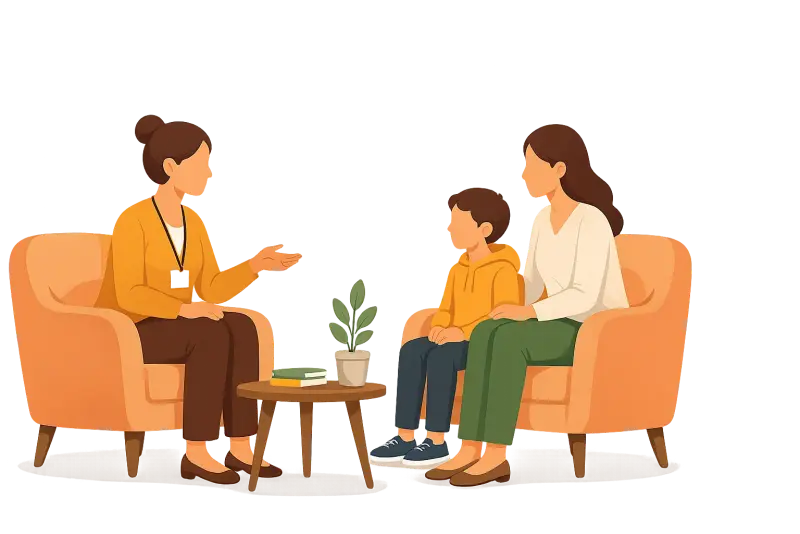
Start by talking with the school, ideally the wellbeing coordinator or year level coordinator, rather than only the classroom teacher. Ask what the school is observing, and share what you are seeing at home. A written plan that both the school and family agree to, even a simple one, tends to work better than repeated one-off conversations.
It also helps to involve your GP early, particularly if there are physical symptoms or if anxiety seems to be a factor. A GP can refer to appropriate allied health support and helps rule out anything medical that needs attention first.
How Nhanya Foundation can help
Nhanya Foundation supports families to navigate the services around a young person, including service navigation and advocacy and allied health therapy services. We do not replace the school or a treating professional, but we can help a family understand the options, coordinate communication between services, and reduce the load of managing it all alone. If this sounds like your situation, reach out or make a referral.